

Education Experts
The George Washington University has a number of experts from the Graduate School of Education and Human Development (GSEHD) available to discuss various education topics. Not sure where to begin? We can help you:
 gwu [dot] edu (gwmedia[at]gwu[dot]edu)
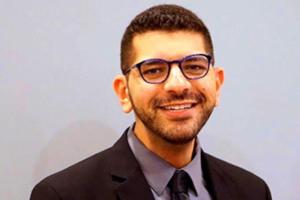
Mina Attia
Dr. Mina Attia is an assistant professor of counseling who focuses on issues of trauma and adjustment of immigrants, refugees, and asylum seekers, as well as multicultural issues of ethics and professional development in counseling. His research has examined the experiences of trauma and adjustment of LGBTQ+ asylum-seeking individuals in Washington, D.C.

Jennifer Clayton
Dr. Jennifer Clayton's research fouses on leadership development, the educational administration internship, and professional learning for school leaders, including principal's, assistant principals, superintendents, and district leaders. She focuses on how school leaders learn to do what they do and how they can do it better. She teaches courses to doctoral and graduate students in school leadership, support and development of teachers, and writing/research.

Deniece Dortch
Dr. Deniece Dortch’s research and teaching grapples with systemic oppression across multiple axes. She uses critical phenomenological approaches to understanding how African American undergraduate and graduate students experience and respond to race and racism at predominantly white institutions of higher education. Dr. Dortch studies the socialization of undergraduate and graduate students of color. She is especially interested in how psychological violence and fear is experienced, manifested and reproduced in the academy. Her most recent projects explore intra-racial relationships, racial agency and their effects on persistence in higher education.
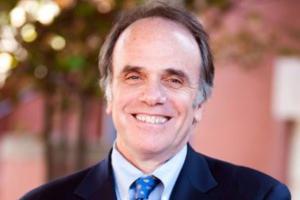
Michael Feuer
Michael Feuer is Professor of Education Policy at the George Washington University, Past President of the National Academy of Education, and Nonresident Senior Fellow in the Center for Universal Education at the Brookings Institution. His areas of interest include education policy, equity in education, testing and assessment, and educational philanthropy.
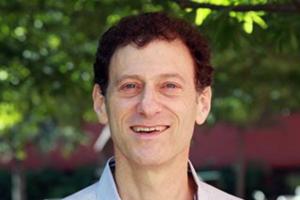
Joshua Glazer
Dr. Joshua L. Glazer’s research and teaching examine multiple approaches to improving under-performing schools in high-poverty, urban environments. Dr. Glazer has published on a wide range of topics, including the replication of effective school improvement models, the role of external interveners in large-scale reform, charter schools and the challenges confronting charter management organizations that operate neighborhood schools, and the dynamics of race and class in state takeover of schools, among others.
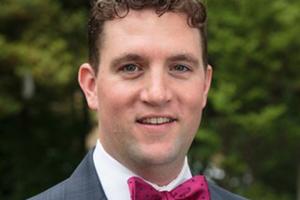
Jonathon Grooms
Dr. Jonathon Grooms’s area of interest is STEM education. His research explores how teachers support their students’ engagement with the essential practices of science and engineering through instructional approaches and authentic science experiences.

Kenneth Hergenrather
Dr. Ken Hergenrather is a professor of counseling whose primary research area focuses on the employment needs of persons living with HIV/AIDS. He has worked in the field of public health education in the area of HIV/AIDS testing, counseling, and clinical drug trials and has collaborated with community-based AIDS service organizations. He can also discuss the highlights of LGBTQ+ history, as well as gender fluidity and becoming a LGBTQ+ ally.

Benjamin Jacobs
Dr. Benjamin Jacobs's interests focus on the preparation of social studies teachers and Jewish educators for school and non-school settings. He also consults with various Jewish education agencies (including The iCenter for Israel Education, Taglit-Birthright Israel, the Jewish Agency for Israel, and M2: The Institute for Experiential Jewish Education) on curriculum, teaching, and research.

Shaista Khilji
Dr. Shaista Khilji's research focuses on issues related to leadership, macro talent development, diversity & inclusion, humanizing organizations, and individual experiences with inequality.
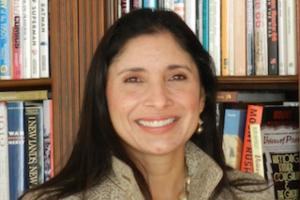
Natalie Milman
Dr. Milman's research focuses on the design of instruction and models for the effective leadership and integration of technology at all academic levels; online student support needs, engagement, and learning; issues of diversity, inclusion, and digital equity; and the use of digital portfolios for professional development.

Maggie Parker
Dr. Maggie Parker's research agenda focuses on the mental health needs of children and adolescents, play therapy, and developmental approaches to counseling. She is interested in exploring the provision of play therapy services within school settings, and teaching play therapy skills to teachers and parents. Dr. Parker's work also explores trauma, diversity, and expressive arts with children and adolescents.

Matthew Shirrell
Dr. Matthew Shirrell's research explores the relationships between policy, the social and organizational characteristics of schools and school systems, and learning, improvement, and teacher retention. In recent research, he has concluded that diversifying the teacher workforce could lead to significant decreases in exclusionary discipline in urban districts, as well as the importance of learning more about the effectiveness of efforts to hire and retain teachers of color. His research allso shows the importance of investigating why Black, Latino and Asian American students are less likely to be suspended from school when they are taught by teachers who share their racial and ethnic backgrounds. Dr. Shirrell’s work has also examined the impacts of federal, state, and local policies on school working conditions and the retention of teachers and school leaders.
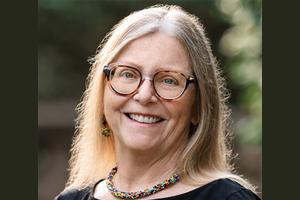
Julia Storberg-Walker
Dr. Julia Storberg-Walker's research focuses on leadership from a diverse array of perspectives, including identities-based, post-humanist, critical/liberatory, and integral. She is an award-winning researcher and former Editor of a Scopus-rated scholarly journal, and currently Chair of the Division of Management, Spirituality and Religion in the Academy of Management. She conducts research based on transformative, indigenous, decolonial, and quantum perspectives.

Bernhard Streitwieser
Dr. Bernhard Streitwieser's areas of expertise include refugees and education and international higher education. His research looks comparatively at the impact of globalization on the internationalization of higher education. His three main focus areas include integration, internationalization and mobility, and competition.

Beth Tuckwiller
Dr. Beth Tuckwiller is interested in teacher mental health and well-being. She has done research on how to interrupt structural drivers of teacher burnout and how to hold systems accountable, as well as using positive psychology with teachers. Dr. Tuckwiller was trained as a mental health counselor and specialized in child and adolescent mental health in her clinical work. After transitioning to the field of special education, she taught high school students identified with emotional, behavioral, and learning differences and co-coordinated school-based programming designed to enhance student mental health, wellbeing, and academic outcomes.

Ryan Watkins
Dr. Ryan Watkins studies artifical intelligence (AI) and education, ethics and AI, and the improvement of learning with technology. In addition, he is interested in privacy issues with educational technology and the policies and ethical guidelines/framworks for AI applications in schools.
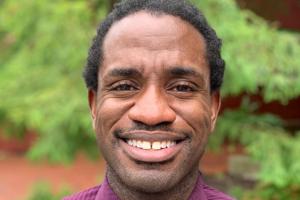
Dwayne Wright
Dr. Dwayne Kwaysee Wright is assistant professor of higher education administration. His research and social activism seek to advance educational opportunity and equity for all students, particularly those historically oppressed and marginalized in American society. He can discuss how identity affects the experience in higher education. His areas of empirical research interest include access, diversity, and equity policies for underserved populations in higher education; the use and influence of social science research in/on law; undergraduate and professional Multicultural Greek Life; and critical race theory & critical pedagogy in post-secondary education. His legal research interest focuses primarily on education law, First Amendment jurisprudence and American equal protection theory.